
There is a particular kind of disappointment reserved for the moment a streaming service quietly drops a film you had been meaning to revisit. That moment arrives for sci-fi fans on December 1, when Ridley Scott's Alien is scheduled to leave Netflix. The 1979 film is not just another title rotating out of a catalogue. It is the movie that taught Hollywood how to make outer space feel genuinely hostile, and its departure is a good excuse to ask why, after more than four decades and a small industry of sequels, prequels and spin-offs, the original still stands alone at the top.
The short answer is restraint. The longer answer is worth unpacking, because the choices Scott and his collaborators made in 1979 are the same choices that modern blockbusters keep getting wrong.
A haunted house story that happens to be in space
Strip away the xenomorph, the Nostromo and the acid blood, and Alien is a very old story: a small group of people trapped in an enclosed space with something that wants them dead. Screenwriter Dan O'Bannon built the script on that skeleton, and the production leaned into it. The crew eats together, bickers about pay and complains about being woken early. They are not heroes on a mission to save humanity. They are contractors doing a job, and that ordinariness is exactly what makes the horror land.
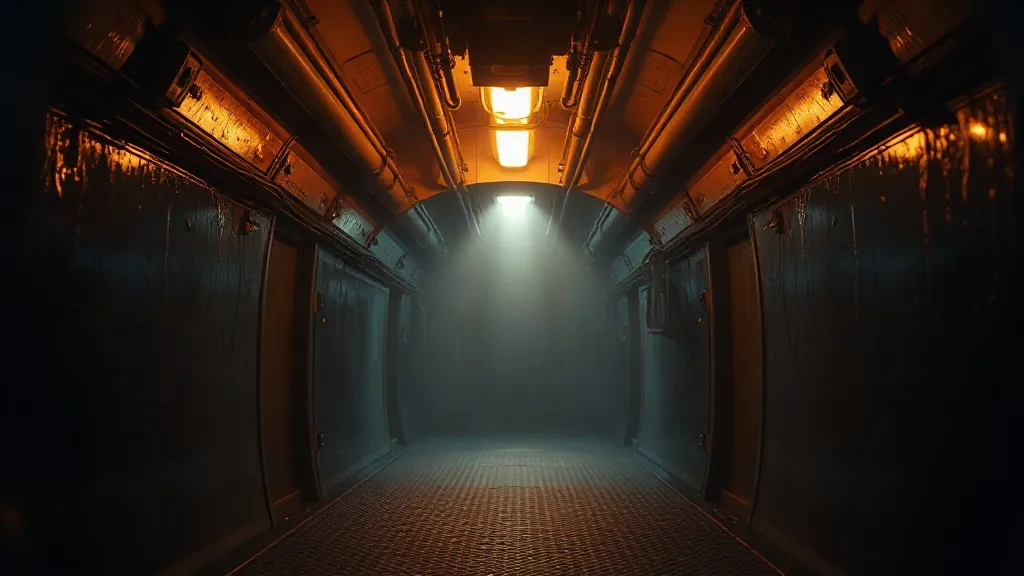
Scott has spoken over the years about treating the ship as a working vessel rather than a sleek fantasy set. The corridors are cramped, the ceilings drip, and the crew's quarters look like they were assembled from whatever parts were available. That grounded texture means the audience never gets to relax into spectacle. Every room feels like it could hide something, and the film rarely lets you see the whole room at once.
The alien you barely see
Perhaps the most striking thing about rewatching Alien today is how little of the creature you actually get. The xenomorph appears in fragments: a tail here, a silhouette there, a hand emerging from the shadows. H.R. Giger's design is extraordinary, but the film understands that the imagination fills gaps more effectively than any prosthetic can. By the time the creature is fully revealed in the finale, it has already been built up in the viewer's head for over an hour.
This is the exact opposite of how most franchise filmmaking works now. Contemporary sci-fi and horror routinely show the monster early, then escalate by making it bigger, faster or more numerous. Alien escalates by making the situation smaller. The crew shrinks from seven to six to five, and the threat feels larger with every loss.
Why the sequels never quite matched it
James Cameron's Aliens is a genuinely great film, and it is a great film precisely because it chose a different genre. Cameron turned the material into a war movie, trading quiet dread for relentless momentum. It worked. But the films that followed struggled to find an equally clear idea. Alien 3 was famously troubled in production, and later entries veered between philosophical ambition and fan service.
The prequels, Prometheus and Alien: Covenant, tried to answer questions the original had deliberately left open. Where did the creature come from? Who were the Engineers? What does any of it mean? These are reasonable questions, but answering them removed some of the mystery that made the first film unsettling. The less you know about the universe of Alien, the scarier it becomes.
It is telling that the most acclaimed recent addition to the franchise, Alien: Romulus, worked best when it returned to the original's playbook: a small cast, a confined setting and a creature kept mostly off-screen. The lesson seems to be that the series is strongest when it remembers what made the first film tick.
The practical craft that still holds up
Alien is a showcase for practical effects, and the film's age has been kind to it in ways that many CGI-heavy productions have not enjoyed. The Nostromo's interiors were built as physical sets, which means the lighting behaves the way real light behaves. The creature was realised through costumes, puppetry and carefully staged shots. When the android Ash is revealed, the film's practical trickery creates a moment of genuine physical wrongness that no digital effect has quite replicated.
There is also the sound design. The ship hums and creaks. The motion tracker's rising pulse has become shorthand for tension across the entire medium. These are small, inexpensive choices compared to modern visual effects budgets, and they are precisely the choices that keep the film alive.
A cast that sells the terror
Sigourney Weaver's Ripley became the franchise's defining figure, but the ensemble around her deserves credit. Tom Skerritt plays Dallas as a tired, decent man out of his depth. John Hurt's Kane is warm and curious, which makes his fate all the more brutal. Ian Holm's Ash is quietly unsettling from his first scene, long before the audience understands why. The film works because these performances are naturalistic rather than operatic.
What the Netflix exit actually means for viewers
Streaming rights rotate constantly, and a film leaving one platform is rarely gone for good. Alien has moved between services before and will likely surface elsewhere, whether on another subscription platform or through a digital rental. The practical takeaway for anyone who has been putting off a rewatch is simple: December 1 is the deadline if Netflix is your only access point.
But the more interesting takeaway is cultural. A film like Alien is not really at risk of disappearing. It is one of the most discussed and studied genre films ever made, and its influence runs through everything from video games to prestige television. What changes when it leaves a major platform is casual access. A generation of viewers who might stumble onto it while browsing will instead find something newer and louder.
That is a small loss, but a real one. Alien is the kind of film that rewards an accidental discovery. It is slow in its opening act, confident enough to let silence do work, and unafraid to end on a note of exhausted relief rather than triumph. Those qualities are harder to find on a streaming menu than they should be.
Frequently asked questions
When is Alien leaving Netflix?
Alien is scheduled to depart Netflix on December 1. Availability dates can shift, so it is worth checking the title page on the service if you are planning a last-minute viewing.
Is Alien the best film in the franchise?
That is a matter of taste, and Aliens has a strong claim for anyone who prefers action. But the 1979 original is widely regarded as the most influential and the most carefully constructed, largely because of its restraint.
Where can I watch Alien after it leaves Netflix?
Streaming rights for the film have moved between platforms over the years. After December 1, your options will depend on your region, so checking a current availability listing or renting digitally is the safest route.
Do I need to watch the sequels first?
Not at all. Alien stands completely on its own, and going in without knowing the creature's design or the fate of the crew makes for a far more effective first viewing.
Why does the original still hold up visually?
Its physical sets, practical creature effects and restrained use of the monster mean the film relies on atmosphere rather than spectacle. That approach ages better than most digital effects work from later decades.