
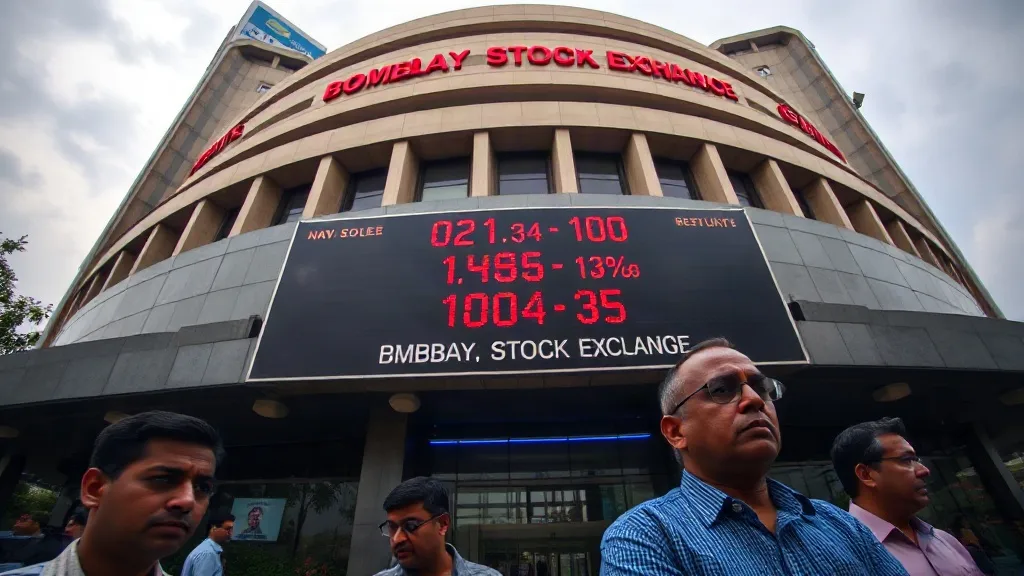
Indian equity benchmarks kicked off Wednesday's trading session on a cautious note, with both the Sensex and Nifty50 registering modest losses in early deals. The downturn comes as a combination of weak global cues, hawkish remarks from US Federal Reserve officials, and escalating geopolitical tensions in the Middle East weighed on investor sentiment. After a strong rally in recent weeks, traders appear inclined to book profits, leading to a subdued start for the domestic markets.
What's Driving the Market Lower?
Several factors are contributing to the soft opening. Overnight, US markets ended lower after Fed officials reiterated their commitment to fighting inflation, suggesting that interest rates may stay higher for longer. This hawkish tone has dampened hopes of early rate cuts, which had been a key driver of the recent global equity rally. Additionally, rising tensions in the Middle East have added to the risk-off mood, with investors flocking to safe-haven assets like gold and the US dollar.
On the domestic front, the recent surge in Indian equities has left valuations stretched, prompting some investors to take profits. The Nifty50 had gained over 3% in the past week, and the Sensex had scaled fresh record highs. Such rapid gains often lead to a consolidation phase, and the current pullback seems to be a natural part of that cycle.
Sectoral Performance: Who's Hit the Most?
In early trade, the selling pressure was visible across most sectors, with banking and financial services stocks among the top losers. The Bank Nifty index was down nearly 0.5%, dragged by heavyweights like HDFC Bank and ICICI Bank. Auto and IT stocks also traded in the red, mirroring the weakness in global technology shares. However, defensive sectors such as FMCG and pharmaceuticals showed some resilience, with select stocks bucking the trend.
Among individual stocks, Reliance Industries, Infosys, and Tata Consultancy Services were among the top drags on the Sensex, while Hindustan Unilever and Sun Pharma managed to eke out small gains. The broader market also felt the heat, with the BSE Midcap and Smallcap indices slipping marginally.
Global Cues: Fed Speak and Middle East Tensions
The hawkish comments from Fed officials have been a key overhang for global markets. Several Fed speakers, including Cleveland Fed President Loretta Mester and St. Louis Fed President Alberto Musalem, emphasized that inflation remains too high and that the central bank needs more evidence before considering rate cuts. This has led to a recalibration of expectations, with markets now pricing in fewer rate cuts this year than previously anticipated.
Meanwhile, the situation in the Middle East remains fluid. Recent developments have raised concerns about potential disruptions to oil supplies, which could impact India's import bill and inflation outlook. Crude oil prices have edged higher, adding to the cautious sentiment. India, being a major oil importer, is sensitive to crude price movements, and a sustained rise could pressure the rupee and widen the current account deficit.
Technical Outlook: Support and Resistance Levels
From a technical perspective, the Nifty50 has immediate support around the 22,500 level, which coincides with its 20-day moving average. A break below this could lead to further correction towards 22,200. On the upside, resistance is seen at 22,800, and a decisive close above this could reinstate bullish momentum. The Relative Strength Index (RSI) has cooled off from overbought levels, suggesting that the market is in a healthy consolidation phase.
Market participants will also keep an eye on the derivatives expiry later this week, which could induce volatility. The options data suggests a tight range for the Nifty, with maximum call open interest at 23,000 and put open interest at 22,500, indicating that traders expect the index to stay within this band in the near term.
What Should Investors Do?
For long-term investors, such dips are often opportunities to accumulate quality stocks. However, given the current uncertainties, it's advisable to stagger purchases and focus on companies with strong fundamentals and earnings visibility. Sectors like capital goods, infrastructure, and private banks are expected to benefit from the government's capex push and improving credit growth. Investors should also keep an eye on global developments, especially the Fed's policy path and oil prices, as these will influence market direction.
Short-term traders, on the other hand, should tread carefully and use strict stop-losses. The market is likely to remain choppy until clarity emerges on the global front. It's also a good time to review one's portfolio and trim positions in overvalued stocks.
Key Events to Watch
Looking ahead, several events could shape market sentiment. The minutes of the Fed's latest policy meeting, due later today, will be scrutinized for clues on the rate trajectory. Additionally, the ongoing corporate earnings season will pick up pace, with several index heavyweights slated to report their quarterly numbers. Domestically, the monsoon's progress and its impact on inflation will be closely monitored. Any signs of a deficient monsoon could spur concerns about food prices and delay rate cuts by the Reserve Bank of India.
Frequently Asked Questions
Why did the Indian stock market open lower today?
The market opened lower due to a combination of weak global cues, hawkish comments from US Fed officials, and rising geopolitical tensions in the Middle East. These factors prompted investors to book profits after recent gains.
Which sectors are most affected in today's trade?
Banking, auto, and IT stocks are among the top losers, while FMCG and pharma sectors are showing some resilience.
What are the key support and resistance levels for the Nifty50?
Immediate support is at 22,500, with resistance at 22,800. A break below support could lead to a test of 22,200.
How should investors approach the current market scenario?
Long-term investors can use dips to accumulate quality stocks, while short-term traders should be cautious and use stop-losses. Focus on fundamentally strong companies and stagger purchases.
What events could impact the market in the coming days?
The Fed meeting minutes, corporate earnings, and monsoon progress are key events to watch. Global cues, especially from the US, will also remain in focus.